
Table of Contents
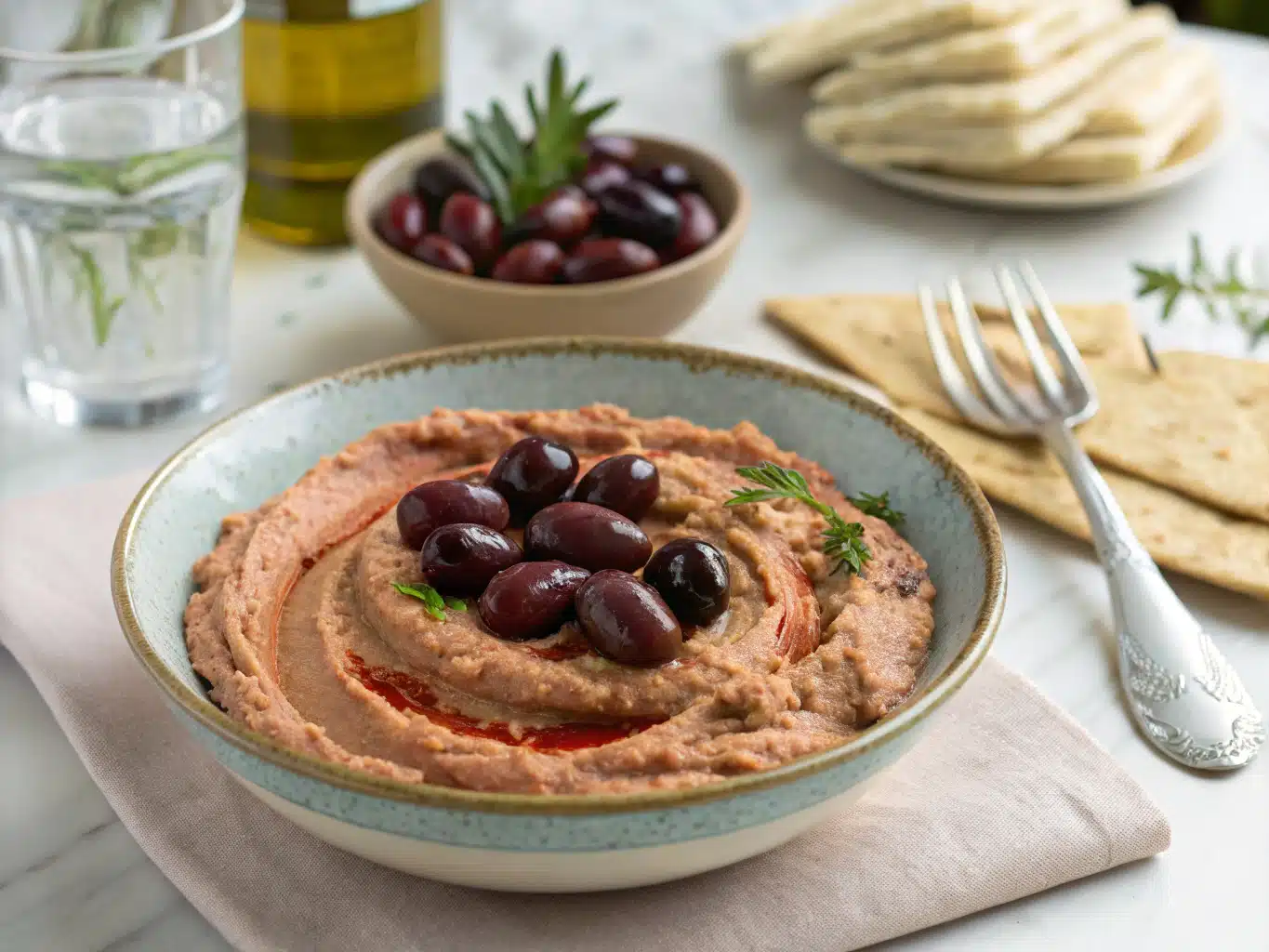
If you’re like me and believe food is more than fuel—it’s connection, culture, and creativity—then this one’s going to stir your soul. In today’s article, we’re diving into the tangy, savory world of kalamata olive hummus. We’ll not only explore how this bold take on traditional hummus came to be, but I’ll also walk you through a mouthwatering recipe with irresistible Mediterranean flair. From ingredients and timing to pro tips and pairing ideas, we’ll cover every delicious detail.
A Journey Through Taste and Tradition
From Backyard Gardens to Bold Mediterranean Flavor
Growing up in a small town in northern California, Sunday dinners always came with a rainbow of vegetables. My mom whipped up hearty lentil stews and my dad would slice fresh tomatoes still warm from the sun. But it wasn’t until years later, after moving to Portland and becoming a full-fledged plant-based chef, that I started giving old-school recipes a serious Mediterranean twist. So when I first stirred kalamata olives into a batch of classic hummus, it wasn’t just about flavor—it was about celebrating where I came from and where I was going.
Kalamata olive hummus is essentially where comfort meets character. You take that familiar silky chickpea base and introduce the punchy, briny depth of kalamata olives—an ingredient that’s bold enough to stand on its own but magical when suspended in creamy tahini and lemon. I’ve made this recipe a staple—not just because it’s delicious, but because it’s the kind of simple, joyful food that brings people together.
Why Kalamata Olives Change the Game
Kalamata olives aren’t just tasty; they’re nutrient-rich additions that elevate hummus into something deeper. Unlike canned black olives, kalamata olives offer a richer, fruitier taste—and when blended into hummus, they add both color and complexity without overpowering the dish. While classic hummus is already a fan favorite, kalamata olive hummus introduces savory-sweet, umami-rich notes that work as well on a crudité platter as they do on kalamata olive bread.
Another benefit? This is a five-minute flavor upgrade that feels gourmet without any additional fuss. Whether you’re spreading it onto toast or pairing it with kalamata olive dip, this is where tried-and-true classics meet next-level flavor. It’s no surprise kalamata olive hummus is quickly becoming a fridge staple for plant-based homes across the country.
Bringing Kalamata Olive Hummus to Life
Ingredients List
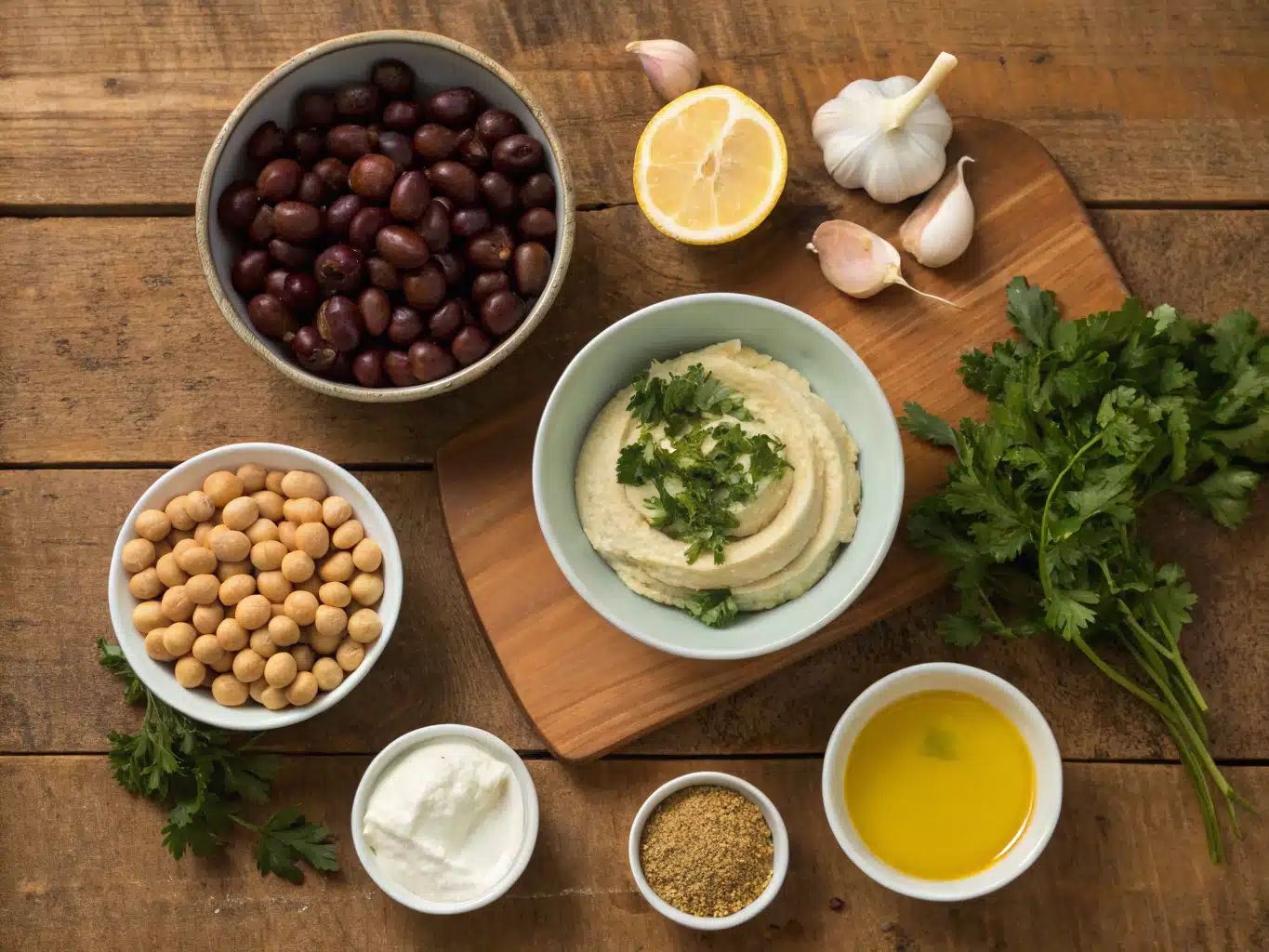
This kalamata olive hummus recipe is creamy, bold, and completely plant-based. Whether you’re serving it as an appetizer or adding a swirl to your grain bowl, you’ll want to start with top-notch ingredients.
| Ingredient | Amount |
|---|---|
| Cooked or canned chickpeas (drained & rinsed) | 1 ½ cups |
| Kalamata olives (pitted) | ½ cup |
| Tahini (stirred well) | ¼ cup |
| Fresh lemon juice | 3 tbsp |
| Garlic (minced) | 1 clove |
| Cold water | 2–4 tbsp |
| Sea salt | To taste |
Substitution ideas: You can swap tahini for sunflower seed butter for a nut-free version. Don’t like garlic? Add a pinch of cumin for aroma instead. Want more intensity? Toss in a handful of chopped sun-dried tomatoes.
Timing: Quick, Satisfying, Zero-Fuss
This snack-worthy dip doesn’t waste time. From prep to serve, it’s on your plate in under 10 minutes. That’s faster than most delivery orders and 25% less time than traditional hummus recipes that require roasting garlic or special soaking steps.
- Prep time: 7 minutes
- Cook time: None
- Total time: Under 10 minutes
Step-by-Step Instructions
- In a food processor, blend chickpeas, kalamata olives, lemon juice, garlic, and tahini until chunky.
- Scrape down the sides, then blend again while drizzling in cold water. Watch the texture—it should turn creamy and smooth.
- Taste and adjust. Add salt or more lemon juice for brightness or a splash more water if too thick.
- Transfer to a bowl, drizzle with olive oil, and garnish with chopped kalamata olives and feta.
Pro Tip: For an extra creamy result, peel your chickpeas before blending. It’s a small step that makes a big difference!
Flavor Profiles & Pairings with Kalamata Olives
Building Deeper Mediterranean Notes
Hummus isn’t just a dip—it’s a flavor base. By using kalamata olive hummus instead of traditional hummus, you’ll turn up the savory volume. Kalamata olives naturally pair well with herbs like oregano and thyme, as well as ingredients like capers and lemon zest. Layer them on toasted bread or as a base for open-faced sandwiches with fresh cucumber and red onion.
Adding kalamata olives also boosts this hummus nutritionally. They’re full of healthy monounsaturated fats and antioxidants, just like olive oil. In fact, according to the National Library of Medicine, polyphenols in olives may contribute to heart health.
Whether dipping cucumbers or smearing onto wraps, kalamata olive hummus elevates every bite with Mediterranean richness you simply won’t find in plain recipes.
Recipe Pairing Ideas You’ve Got to Try
Once you’ve mastered kalamata olive hummus, the pairings become endless. Serve it alongside crisp pita chips and a refreshing side like kalamata olive salad for a crowd-pleasing appetizer platter. Or, layer it in a pasta recipe full of Kalamata olive flavor with roasted cherry tomatoes and basil.
Want more protein? Use the hummus as a topping for grilled tofu skewers or as a spread for this chicken and kalamata olive dish, transforming leftovers into a gourmet sandwich. Don’t be afraid to go from dip to dressing either—just add a tablespoon of water and lemon juice to make it drizzle-worthy.
Nutritional Benefits & Storage Details
How Healthy is Kalamata Olive Hummus?
Like all great food, flavor and nutrition should coexist. Thanks to chickpeas, tahini, and kalamata olives, this hummus offers:
- Plant-based protein and fiber (from chickpeas)
- Calcium and iron (from tahini)
- Heart-healthy fats (from kalamata olives)
With each serving averaging around 100 calories and boasting a balance of macronutrients, kalamata olive hummus is lighter than rich creamy dips, yet more flavorful than traditional hummus due to its tangy layers.
And yes—it’s healthier than many overly processed store-bought dips. Compared to typical snack options, it has lower saturated fat and higher nutritional value, making it a win-win for both flavor and health-forward goals.
Shelf Life & Best Ways to Store
Does adding olives change hummus shelf life? A little, yes. While traditional hummus typically lasts 5–7 days when refrigerated in an airtight container, kalamata olive hummus may slightly shorten that to about 4–5 days because of the olive brine’s natural fermentation.
To keep it fresh:
- Use a glass container with a tight lid.
- Store it in the back of your fridge, where temps are most consistent.
- For extra longevity, use a clean spoon each time—no double-dipping.
Hummus can also be frozen in small portions for future use. Just thaw in the fridge overnight and re-blend for smooth texture if needed.
FAQs About Kalamata Olive Hummus
What is kalamata olive hummus?
Kalamata olive hummus is a savory twist on traditional hummus. It blends creamy chickpeas, tahini, garlic, lemon juice, and tangy kalamata olives, creating a Mediterranean-style dip full of umami and richness.
How do you incorporate olives into hummus?
Simply add pitted kalamata olives directly into the food processor with the rest of your hummus ingredients, then blend. The briny punch infuses right into the creamy texture.
Does adding olives change hummus shelf life?
Yes, slightly. Olives introduce more moisture and acidity, which may reduce shelf life to 4–5 days in the fridge, compared to traditional hummus’ 6–7 days.
Is olive hummus healthier than classic?
Olive hummus offers more heart-healthy fats and antioxidants due to the kalamata olives, making it a nutrient-enhanced version of traditional hummus with added flavor and benefits.
Conclusion
There’s something magical about taking a beloved staple like hummus and giving it new life with just one smart ingredient—kalamata olives. Whether you’re new to Mediterranean flavors or a seasoned plant-based chef, this kalamata olive hummus deserves a spot in your weekly rotation. It’s easy, quick, and brimming with layered flavor that elevates any meal or snack. Ready to trade ordinary for bold and briny? Give this recipe a spin and taste the Mediterranean magic in each bite.
Print
Creamy & Bold Kalamata Olive Hummus: A Plant-Based Favorite
- Total Time: Under 10 minutes
- Yield: 1.5 cups
Description
Creamy, bold, and plant-based—this kalamata olive hummus brings a Mediterranean twist to a beloved classic. Perfect for dipping, spreading, or adding to meals.
Ingredients
Cooked or canned chickpeas (drained & rinsed) – 1 ½ cups
Kalamata olives (pitted) – ½ cup
Tahini (stirred well) – ¼ cup
Fresh lemon juice – 3 tbsp
Garlic (minced) – 1 clove
Cold water – 2–4 tbsp
Sea salt – To taste
Instructions
1. In a food processor, blend chickpeas, kalamata olives, lemon juice, garlic, and tahini until chunky.
2. Scrape down the sides, then blend again while drizzling in cold water until creamy.
3. Taste and adjust: add salt, lemon juice, or water as needed.
4. Transfer to a bowl, drizzle with olive oil, and garnish with chopped kalamata olives and feta.
Notes
Peel chickpeas before blending for extra creaminess.
Swap tahini with sunflower seed butter for a nut-free version.
Add sun-dried tomatoes for deeper umami.
Serve with pita chips, on toast, or in wraps.
- Prep Time: 7 minutes
- Cook Time: None
- Category: Dip
- Method: Blending
- Cuisine: Mediterranean
Nutrition
- Serving Size: 2 tbsp
- Calories: 100
- Sugar: <1g
- Sodium: 160mg
- Fat: 8g
- Saturated Fat: 1g
- Unsaturated Fat: 6g
- Trans Fat: 0g
- Carbohydrates: 6g
- Fiber: 2g
- Protein: 3g
- Cholesterol: 0mg
Keywords: hummus, kalamata, olives, vegan, Mediterranean, dip